


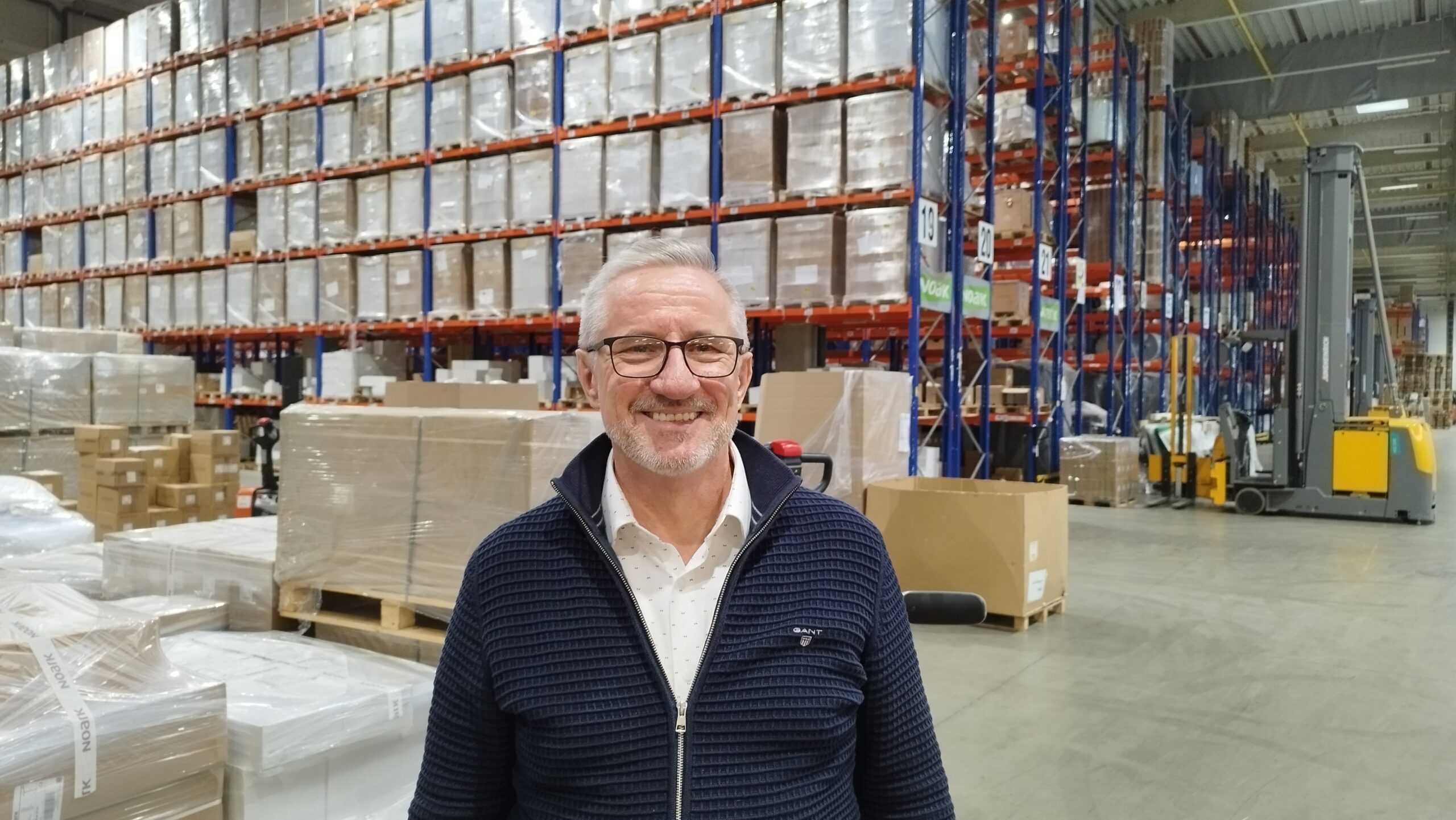
PST CLC Mitsui-Soko’s distribution centers are currently continuing projects to optimize occupancy and upgrade the productivity evaluation system. The next phase of the expansion of online pallet account management and tracking has also been launched. The company is currently testing technologies for automated cleaning and plans to acquire mechanical boosters to assist with heavy lifting in the future.
PST CLC Mitsui-Soko’s distribution centres across the country are focusing on optimising warehouse occupancy. The “warehouse occupation” project focuses on warehouse pricing in m³ and targeted efficient use of warehouse capacity.
A project on productivity evaluation system innovation is also ongoing. “We are now testing the setup in live operation, where we monitor productivity using a database into which all activities – employee performance – are automatically entered on a daily basis,” says Pavel Nodžák, Logistics General Manager at PST CLC Mitsui-Soko. He adds that the project is divided into four phases, including data collection, loading activities outside the Logenius system using cards and a terminal, tracking stock by pallet type and comparing standards with real times. The outputs are then visualised using graphs and tables available on the Helpdesk.
Logistics managers at PST CLC Mitsui-Soko are also heavily involved in a project to extend online pallet account management and tracking. “We have currently started the next phase of a project to expand pallet account management within warehouse logistics, which aims to increase transparency and efficiency in pallet management. Among other things, this initiative will contribute to the accurate accounting of services and the optimisation of warehouse operations,” explains Pavel Nodžák.
He further states, “In the area of warehouse automation, we have identified technologies for automated cleaning, such as robotic vacuum cleaners and sweepers. These systems bring greater efficiency, lower costs and a safer working environment. Further testing of selected machines is currently underway, following the completion of the first and second phases of the tender process.”
Selection and testing of booster options for heavy lifting is also underway. “Our safety guidelines set hygiene limits for manual handling of loads. If these limits are exceeded, work must be interrupted or alternate activities must be arranged,” says Pavel Nodžák. He sees the introduction of mechanical boosters in the operation as another step towards reducing the physical load, which will contribute to the safety and comfort of employees.
