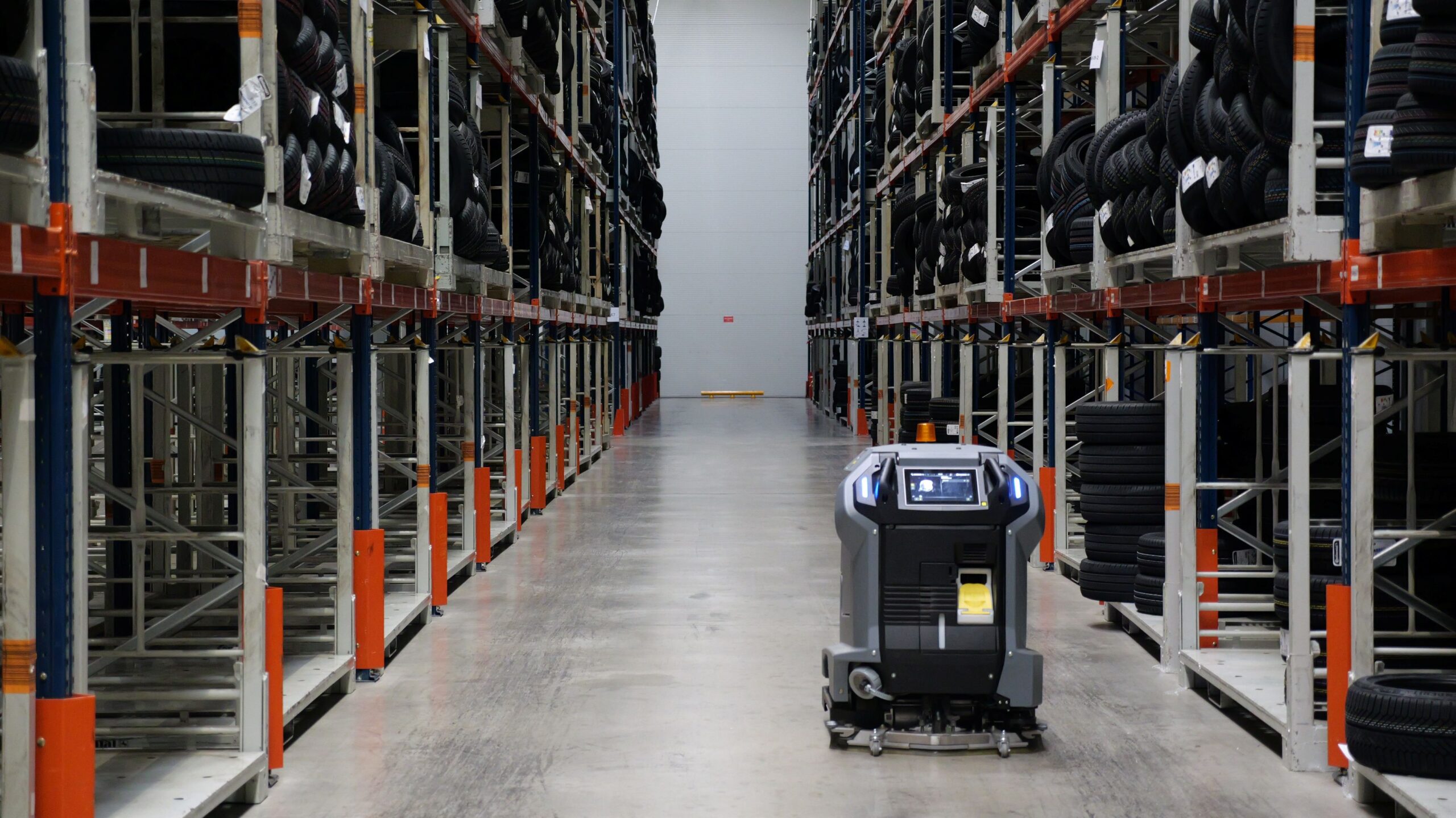
Logistics automation doesn’t always have to start with complex and costly projects. A practical first step can also be the area of cleaning. This is exactly the path taken by PST CLC Mitsui-Soko at the logistics centre in Nehvizdy, which deployed the first Kärcher KIRA B 50 robotic washing machine after years of operating a classic washing machine.
One washing machine has already been in operation in the warehouse since 2012, but it was a classic device requiring human operation. Due to its age and gradual demise, the company did not just decide to replace it with a new similar model, but took advantage of the situation to move on. Instead of a standard machine, it has chosen the path of a robotic, automatically controlled washing device that can work independently and regularly without the direct presence of the operator.
It was not a quick decision. “We paid a lot of attention to the selection. In total, we approached and tested seven suppliers in operation, who presented their solutions in the form of one-day demonstrations directly in the warehouse. Subsequently, there was an analysis of the data obtained and an internal discussion about what the new machine should actually meet,” says Marek Pavel, project manager of PST CLC Mitsui-Soko. In the end, the first round resulted in a shortlist of three suppliers whose machines were put into operation for a longer period of time. The company tested each of them for 14 days directly in the warehouse. The final choice fell on the Kärcher KIRA B 50 model.
The result was not only determined by the quality of the cleaning itself. Other practical parameters that are essential for long-term operation also played an important role. In the final selection, there was also competition in the form of Chinese robots, which performed very well in terms of cleaning itself. However, according to Marek Pavel, the weaker point was the area of user-friendliness, service facilities and digital management. “The machines handled the cleaning very well, but they had reserves in maintenance, remote control or clarity of reports, for example. This is where Kärcher was stronger for us,” said Marek Pavel.
Interestingly, the chosen machine was not without reservations from the beginning. PST CLC Mitsui-Soko identified three main problems: the machine could not cope with the large conveyor belt, it did not return to the docking station properly, and there was an occasional problem with the sensor. However, the supplier responded to the comments. After about two and a half months, he came up with an update that not only eliminated the alleged shortcomings, but also made the whole machine 20 percent faster. It was this experience that was one of the arguments for PST CLC Mitsui-Soko in the final decision. It has shown that the supplier can respond to real operational requirements and solve them in a software way without the need for hardware interventions. “When we saw that there was no need to change the hardware parts and that it was enough to modify the software and further train the machine, it was a signal for us that the supplier could accommodate us in the future,” adds Marek Pavel.
From an economic point of view, the investment in a robotic washing machine is based on approximately three years of return, according to the company’s calculations. The main benefit is the saving of human labor and at the same time higher regularity of cleaning. Previously, cleaning depended on when the worker had space to devote to it. This meant that the warehouse was not always cleaned with the same quality or frequency. The new robotic solution ensures that cleaning is carried out systematically and on a daily basis. “It was the case with man that he cleaned when it was needed or when he had the opportunity. Now we can be sure that the warehouse will be cleaned continuously and regularly,” says Marek Pavel.
The head of the logistics center in Nehvizdy, Lukáš Kukla, also positively evaluates the operation of the machine. “Since tracing, the machine has been working without any problems. Using the web application, we can see what he has washed, when he washed it, what his water and energy consumption is, or when the battery needs to be recharged. So far, we are very satisfied with it and the quality of cleaning in the hall meets our expectations,” says Lukáš Kukla.
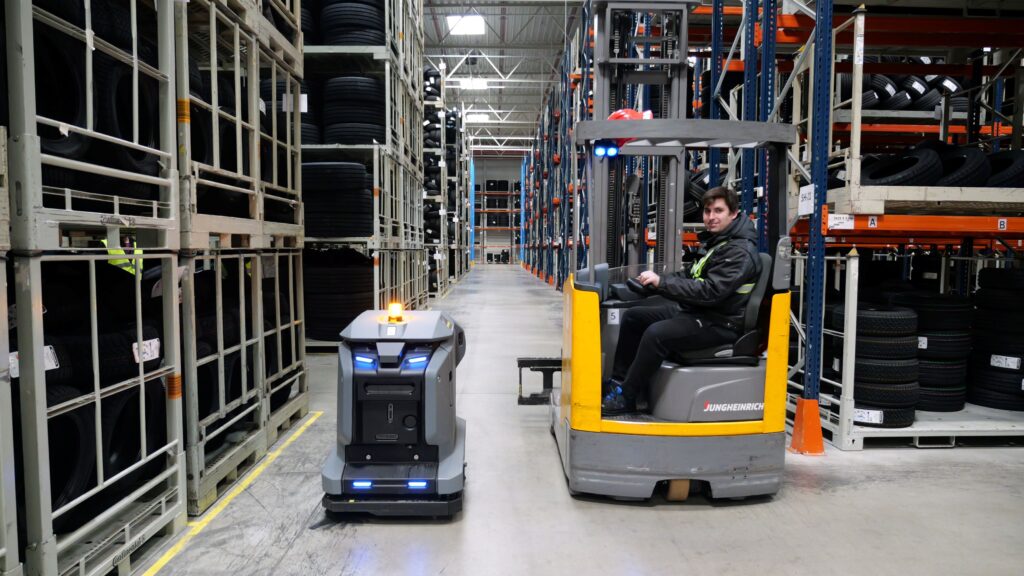
The operation of the robot is planned with regard to battery capacity, water consumption and the operational reality of the warehouse. The entire space was divided into 12 sections, which are combined into daily plans as needed. The goal is to use the machine as much as possible at times with lower traffic intensity. However, due to the size of the warehouse, the robot moves naturally even when warehouse workers and handling equipment are present in the hall. According to Lukáš Kukla, however, the movement of the machine in normal operation is trouble-free. “It has no problem with that, because it has sensors everywhere, front and rear. It can turn around easily even in a small place. It stops, reacts quickly and avoids an obstacle. Even when moving the handling equipment, it works without any problems,” says Lukáš Kukla.
The ability to respond to the changing warehouse environment is one of the important features of the deployed solution. “The warehouse is constantly changing, the number of pallets is increasing, the number is decreasing, but the robot evaluates it itself and reacts quickly. The original map was created according to the layout by Kärcher technicians and the machine knows exactly where to drive,” adds Lukáš Kukla.