


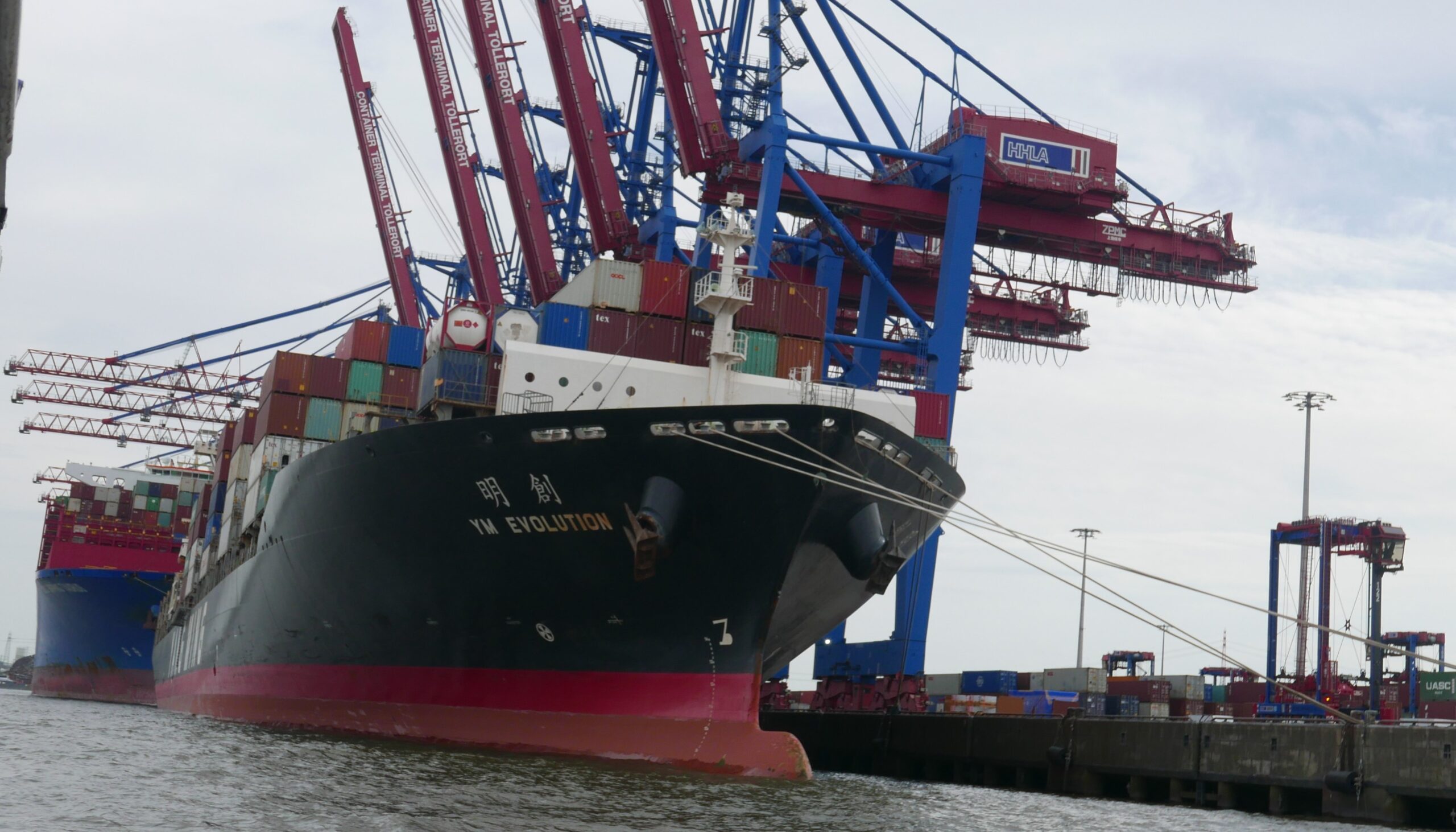
Last year behaved in sea transport in a way that would have contradicted all basic economic principles just a few years ago. On the one hand, there is a massive influx of new ships, the advent of megamax vessels and a structural surplus of capacity. On the other hand, however, the prices and the behavior of shipowners do not correspond to this. “According to textbooks, sea transport in such a situation should be priced on the floor, customer-friendly and offering long-term sustainable rates. But the reality is different,” says Petr Rožek, Executive Director of the Association of Freight Forwarding and Logistics of the Czech Republic.
There are several reasons for the capacity surplus. “A new generation of the largest container ships, which are most often used on the Far East – Europe routes, has entered operation. At the same time, the US customs regime and changes in trade flows, which limited direct imports from China to the USA in certain periods, have had a significant impact on the market,” says Petr Rožek. As he adds, another factor is the strong position of air cargo, which has taken over some of the valuable and time-sensitive goods. Maritime transport has been perceived as less reliable in recent years.
“Sea freight prices were at a relatively low level in 2025. This was mainly due to low demand and excess transport capacity. Shipowners tried to increase prices during the year, but these efforts were rather momentary,” says Jan Bláha, Transport Director of PST CLC Mitsui-Soko. Petr Rožek explains that although sea freight prices remained relatively low in 2025 compared to the “covid” years, they still did not fall to the level that could be expected with such a significant excess of capacity and weaker demand.
Jan Bláha continues: “Last year, we recorded a stagnation of shipments from China. The volume has not deviated in any way, it has been high for a long time. Interest in transports from Vietnam and Malaysia grew slightly. We have recorded a high increase in transports from Turkey. This is probably due to the relocation of production facilities or rather a change of suppliers. Turkey is closer to European companies and is often cheaper.”
Blank sailings as a market management tool
One of the main mechanisms by which shipowners maintain a strong position is blank sailing, i.e. sudden and often unexpected cancellation of sailings. “This regime is not new, but this autumn was extreme in this regard,” says Petr Rožek. It is also worth mentioning the transshipment of goods from ships heading from China to Europe.
He adds: “We have recorded record numbers of cancelled departures, timetable changes and multiple reloads of goods. Today, it is no exception to translate goods two or three times between China and Europe.”
The Red Sea as an unexpected rescue for shipowners
Moreover, the crisis in the Red Sea entered this equation. Security risks prompted shippers to circumnavigate Africa around the Cape of Good Hope. “From the point of view of shipowners, paradoxically, it meant liberation. The lines have been extended, which has practically swallowed up the capacity surplus,” specifies Petr Rožek. However, he is convinced that circumnavigating Africa is not an ideal solution in the long term. The routes are longer, riskier and exposed to extreme weather, there are often storms that result in cargo losses. That is why, according to available signals, shipowners are gradually preparing to return to the route through the Suez Canal as soon as the safety situation returns to normal.
What’s next: excess capacity and pressure on prices
Petr Rožek further notes: “As soon as the cruises are shortened, a significant excess of capacity may reappear. For large ships, this means a major problem: shipowners will be in danger of having nothing to load. It is possible that shipowners will resort to canceling cruises, perhaps they will proceed to the shutdown of ships or even scrapping. But from the point of view of customers, it should mean calming the market.”
According to all known theories, the imbalance of supply and demand should start to play in favor of carriers and customers. In Petr Rožek’s opinion, the current price jumps should gradually weaken. The year 2026 should therefore be marked by a calming of the sea freight market. “These are our assumptions based on current information, but only the real development on the market will show everything,” points out Petr Rožek.
“We are optimistic in this regard. We communicate with our customers regularly, keep track of their shipments and help them plan their shipments with regard to possible market developments. It is transparency and work with up-to-date information that will be key in the coming period,” adds Jan Bláha.
